Motor Vehicle Accidents

calla lily

Motor vehicle accidents happen every day. Most are fender benders that cause no injury or serious damage. The insurance company of the driver at fault pays for the damages, and everyone goes on with their lives. Unfortunately, more serious accidents also occur.

In addition to the damage to the vehicles involved, there can also be catastrophic injuries. In the worst cases, there can be fatalities. After a fatal accident, the loved ones of the victim can take steps to manage the impact.

Wrongful deaths

A fatality in a car accident is often a wrongful death. What this means is that someone else’s negligence causes the loss of life. In these cases, negligence could involve driving while under the influence of alcohol, failing to obey traffic signs or laws or driving a vehicle with faulty equipment. Whatever the cause, the negligent party is responsible for the death.

Recovery of damages

In the case of a fatal car accident, the victim is unable to recover damages. This falls to a close family member, such as a spouse, partner or child. The family should contact the insurance company of the party responsible for the accident as the insurer may be responsible for paying the expenses incurred as a result of the wrongful death. The family may also file a lawsuit to recover other damages, including those for loss of companionship.

Losing a loved one in a car accident is a horrible experience. Recovering damages can not bring back the deceased, but it can provide financial relief during a time of grief.

family in a convertible car

There is a specific element of multitasking that comes with driving a vehicle. From the moment you start your car, you need to think about several things at the same time so that you and the others on the road and in the vehicle can be safe.

In some sense, distractions are inevitable. However, as a driver, it is your job to avoid the distractions that can you and manage the remaining potential distractions.

Here are a few tips for managing the distractions in your vehicle.

Eating on the go is a no-no

Eating is a simple task. Whether you are a teenager or an older driver, you have been eating for many years. You have likely managed to eat while performing other tasks.

Despite the abundance of drive-thru restaurants, eating while you drive can be a significant distraction. Of course, if everything goes well, there is nothing to worry about. However, any meal could be risky since you could be distracted by spills or drips from hot food.

Minimizing eating while driving can help you stay focused on the road instead of a sandwich falling apart into your lap.

Managing the children

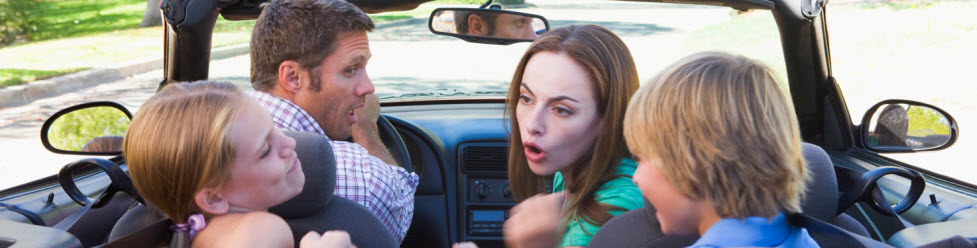
Children are a distraction that you cannot avoid. If you have children, you will need to take them places, and they will add a level of distraction.

Your kids are an example of a distraction that you need to manage. You can help your children be less distracting by considering options such as:

  • Having an adult passenger who can tend to the children’s needs
  • Giving your children activities to entertain themselves
  • Teaching your children to ride quietly so everyone can be safe
  • Using incentives when they are quiet
  • Ensure that your children are secured in their car seats

There will be a learning process for you and your children as you work together to avoid distractions.

When driving, watch for things that can be a potential distraction and determine if they are something you can remove or need to manage. As you remove more distractions, you may find it easier to manage the remaining distractions.

Have you been injured by a distracted driver? Contact us today for a free consultation.

You may never overcome the loss of a limb, but the adjustments you make just may help you prevail and carry on with your life. Granted, you face plenty of challenges thanks to the negligence of a driver whose car crashed into your motorcycle.

However, now, you must look ahead and face these challenges. Understand that there will be many. Even feeding yourself can be difficult, but you can confront each challenge. Such a strategy can only help.

Surgery, therapy and prosthetic limbs

A Rutgers University study noted that most traumatic amputations are the result of motor vehicle crashes (42.9%), industrial accidents (26.2%) and motorcycle crashes (21.4%). In addition, more than half of the amputations take place below the knee.

Here are some of the challenges you can expect after a traumatic limb loss:

  • A number of surgeries: After removing the damaged limb, surgeons must reconstruct the remaining leg or arm. Careful work must be done when dealing with bones, muscles, nerves and blood vessels. Plastic surgery and skin grafts also may be necessary.
  • Lengthier times in the hospital: With additional medical treatment, you can expect more stays in the hospital.
  • Therapy: A traumatic experience and injury may lead to post-traumatic stress disorder (PTSD). Psychological therapy may help you cope with what happened. In addition, physical and occupational therapy may be necessary to regain everyday and work-related skills.
  • Adjusting to life with a prosthetic limb: You may have to consider different types of these limbs and have multiple fittings to find the right one.
  • Facing everyday tasks: Using utensils to eat may be difficult, so can buttoning a shirt. Driving – a long-time sign of independence – also may prove challenging.

Your life will not be easy after losing a limb in a crash. But you still have a life.

Facing challenges the best you can

A new challenge may surface every day. Be prepared physically and, especially, mentally. You have experienced a life-changing injury. Your body, mind and spirit have each taken hits. Now, face these challenges the best that you can.

Car accidents happen every day. Rollover crashes can be one of the most devastating types of traffic accidents. A recent rollover crash on Interstate 4 resulted in significant delays for commuters.

While details about the vehicle and passengers involved in this accident were not reported, it’s worth understanding how these factors than can affect the risk of a rollover accident – and resulting injuries.

Vehicle type

Many drivers prefer buying SUVs for their added height and sturdiness. In an SUV, a driver can see above other cars and feel more protected behind the wheel. However, the higher center of gravity of such vehicles actually makes them much more prone to tipping. In fact, an SUV is more than 11 times as likely to roll over in a crash, compared to a standard car. Light trucks also have an increased risk of rolling over: 1.7 times higher than a car.

Age of passenger

Due to the nature of rollover accidents, such accidents tend to result in passenger death more often than other types of accidents. This is especially true when children are involved. Studies have found that the severity of injuries sustained from rollover accidents is considerably worse for children. When a child is involved in a rollover crash, there is a two-fold increased risk in injury and an 80% greater risk of death.

Rollover accidents tend to lead to some of the most serious car crash injuries – from traumatic brain and spinal cord injuries to death. If you or a loved one sustained injuries in a rollover crash due to someone else’s negligence, it’s important to understand your rights and recourse under the law.

States and municipalities must remain proactive when dealing with dangerous intersections. Modifying and repairing perilous roads and intersections remains a priority. Intersection design and safety play critical roles in protecting drivers, passengers and pedestrians.

Here are some statistics to ponder. The Federal Highway Administration (FHWA) notes that more than half of all fatal and injurious crashes in the U.S. occur at or near intersections. Also, the National Highway Traffic Safety Administration (NHTSA) reported that 34% of all motorcyclist deaths took place at intersections in 2019.

Tampa-area trouble spots

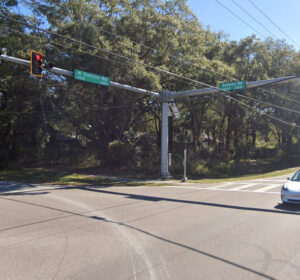
Dangerous Intersection at Sydney Rd & N Valrico Rd in Brandon, Florida - ©2023 - Google

The Gulf Coast region of Florida has its share of dangerous intersections, including two that have gotten recent attention for ongoing problems, collisions and fatalities.

East of Tampa, Hillsborough County plans to spend $2.2 million at a convergence of two roads in Brandon; N. Valrico Rd. and Sydney Road. Improvements may help the county shake its tag as being among the country’s most dangerous for drivers and pedestrians. In the past decade, more than 1,800 people died in the county in motor vehicle accidents.

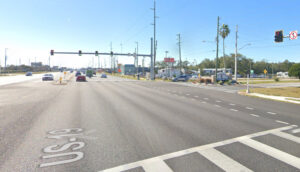
Dangerous Intersection in Hudson, Florida - US19 and Beach Blvd - ©2023 Google

North of Tampa in Pasco County, two people died in March when the driver of an SUV crashed into a construction barrel and struck a sedan traveling in the same direction on U.S. Highway 19. An oncoming car swerved to avoid striking the sedan and collided with the SUV, which rolled over. Killed in the collision were a passenger in the SUV and the driver of the car that crashed into the SUV. Drivers have long complained about the dangers of this intersection at Beach Blvd and US19, where a reported 10 deadly collisions have recently occurred.

Poor design and negligent drivers

A variety of factors contribute to dangerous intersections and may include:

  • Poor design.
  • Lack of road signs or inappropriate road signs.
  • Non-functioning, malfunctioning and confusing traffic signs.
  • Negligent drivers including those who speed, are distracted or drowsy as well as under the influence of alcohol and drugs.

Some of these factors are out of the control of the typical driver. But it is always a good idea to focus on defensive driving.

Understand every potential hazard

Drivers and pedestrians must remain alert regarding the potential dangers at traffic intersections. State and local governments play an obvious role in improving these roadways. However, drivers also must understand the potential hazards caused by negligent and reckless drivers.

Free Consultation

Injured in an accident at a dangerous intersection or anywhere in the Tampa area? Contact our car accident law firm to discuss your personal injury claim. Email us for a free initial consultation or call 813-879-0700.

You are stopped at a red light. And all of a sudden you are rear-ended. The driver behind you was texting and drove directly into your back bumper.  Your neck and back are hurting.  You call the police and an ambulance takes you to the hospital where you incur expensive medical bills.  Auto insurance is available to cover those bills, right?  YES!  If not, be sure to call us.

But what happens if you are not in a traditional motor vehicle accident?  What if you are injured while someone is trying to steal your car?  Did someone else close the car door on your fingers? What if a rock hits your windshield causing you to crash?

Should you use your health or auto insurance?  What injuries will auto insurance cover?

By law your auto insurance pays first and then your health insurance. Any injuries “arising out of the ownership, maintenance, or use of a motor vehicle” are covered under car insurance.   All that is required is some link between a motor vehicle and the injury.

The law applies this concept broadly and extends insurance coverage to events you may have not realized are covered by car insurance. The vehicle does not have to be the physical cause of the injury.

Coverage even exists when the use of a vehicle sets into motion a chain of events that results in the injury. Said differently, coverage will be found to exist if the injuries “flow from,” “originate from” or otherwise “grow out of” the ownership, maintenance, or use of a motor vehicle.

Generally, people who operate automobiles must exercise “reasonable care under the circumstances.” Failure to use reasonable care (negligence) is the basis in most lawsuits for damages caused by an automobile accident. Our auto accident attorneys in Tampa, Florida have the experience and skill required to successfully help you through the difficult time following an accident.

Remember, auto accident insurance comes in many different forms.  In Florida, you can purchase coverage for:

  • Personal injury protection (PIP) – Also known as no fault insurance and required in Florida. Pays expenses for medically necessary treatment and lost wages regardless of fault. You must receive initial services and care within 14 days after the motor vehicle accident. Our auto accident lawyers can explain PIP in more detail.
  • Medical Payment Coverage (MedPay) – MedPay is additional coverage that supplements PIP and ensures that 100% of your medical bills are paid up to the amount you purchased.
  • Bodily injury liability (BI) – Pays for injuries caused by you to others. If you are sued, BI will pay for your legal representation as well.
  • Property damage liability (PD) – Pays for damage you cause to other people’s property (car etc.) in a motor vehicle accident. Required in Florida.
  • Uninsured/Underinsured motorist (UM) – Adds to the coverage available from the at-fault party. Available to compensate you in the event the at-fault party has insufficient insurance coverage or no insurance coverage at all. It is estimated that one out of every six drivers on the road in Florida does not have insurance.

Thankfully, our legal system is set up to help people who have been hurt by the actions of others. However, sometimes to navigate through our legal system, you need the services of an experienced attorney.

Experienced Car Accident Lawyers On Your Side

The car accident attorneys at Clark Trial Law, have been representing injured victims in the courtroom for nearly half of a century. Through the years, we’ve had to witness a lot of painful situations and answer many difficult questions.  That is why we will do everything possible to ensure our clients are protected by the laws that were written especially for them.

We pride ourselves on being able to argue each case before a jury so that our clients receive the absolute best legal care they could have hoped for. Some of the rights we strive to attain for our clients include:

  • Medical care for automobile related injuries
  • A thorough medical evaluation by doctors who specialize in auto related injuries
  • Ongoing care for disabilities
  • A Tampa, Florida personal injury attorney who will listen to your case, help you understand what to expect, and empower you to face large insurance companies
  • A personal injury lawyer who is experienced in and certified to take cases to trial
  • Compensation for medical bills and property damage
  • Reimbursement of lost pay and lost earning capacity
  • Damages paid for pain, suffering, emotional trauma, and wrongful death

At Clark Trial Law our practice areas include:  auto accidents, truck accidents, motor cycle accidents, insurance coverage disputes, wrongful death, premises liability, defective products, and consumer class actions and fraud.

Free Consultation For Injury Claims From A Car Accident

Here at Clark Trial Law, we have over 40 years of experience ensuring that our clients receive the benefits to which they are entitled.  If you are injured in connection to a vehicle or you are being denied coverage for your injuries, please call our office at 813-879-0700 to schedule a free consultation to review your rights.

Even though Florida law says that every driver should carry at least some auto insurance, in reality, there are thousands of drivers on Tampa Bay area roads who are not insured at all. In addition, thousands more only carry the bare minimum insurance. What this means to you is, if you are injured in a car accident, you may have to use your own insurance to pay your medical bills, lost wages, lost ability to work, and other damages. But what type of insurance should you carry to give yourself the protection you need?

Due to the many uninsured and underinsured drivers out there, virtually every Tampa auto accident lawyer will recommend that you carry a significant amount of uninsured motorist (UM) and underinsured motorist (UIM) protection insurance. By purchasing these policies—which often only cost a few dollars a month—you and your Tampa accident attorney will have a policy to pursue compensation for your injuries if a driver with no insurance (or little insurance) hits you.

Why Are these Policies Important to Your Tampa Auto Accident Lawyer?

To maintain a valid car tag and registration in Florida, drivers must carry a minimum of $10,000 personal injury protection (PIP) and $10,000 property damage liability (PDL) insurance. Personal injury protection, or PIP, insurance covers 80 percent of your medical expenses and 60 percent of your lost wages, up to the $10,000 limit, no matter who is at fault in the accident. Therefore, if you are injured in an accident, your own PIP insurance would be the first policy to pay toward your medical bills.

One possible drawback to these insurance requirements is that $10,000 does not go very far. Sometimes your emergency room bills alone will total more than $10,000. So once your PIP insurance is gone, what is the next step for you and your Tampa auto accident lawyer? If the accident was the other driver’s fault, then the at-fault driver’s insurance likely would be the next policy in line to compensate you for your injuries. However, if the at-fault driver is not insured or only carries his/her own PIP insurance as mandated by Florida law, you are out of luck unless you carry UM and UIM insurance.

With UM and UIM insurance, claims that exceed your own PIP and the at-fault driver’s insurance will be covered up to the limits of your UM/UIM policy. Often, UM/UIM policies are one of the only coverages available for Tampa personal injury attorneys when they make a claim for their clients.

To speak with a Tampa auto accident lawyer about the insurance policies that may be available in your case—including UM/UIM coverage—please contact Clark Trial Law today for a free initial consultation. Call 813-879-0700.